ABOUT Ishigaki-yaki
About ishigaki yaki
About ishigaki yaki
ABOUT Ishigaki-yaki
The Origins of the Fused Glass Pottery
Ishigaki-yaki pottery is has close ties with Yoron-yaki pottery, sharing many of the same technical aspects.
The Yoron-yaki pottery was established in 1970, by Kihachiro Kaneko (also known by his adopted artist name, Kyo-u), with the support of the Koishiwara-yaki school of pottery based in Fukuoka prefecture.
Kyo-u was also a photographer, who worked under the name of Kiyomi He studied under Ken Domon,
a noted master of realism, working as his assistant during photography for A Pilgrimage to Ancient Temples and other publications, during which time he stayed in Kyoto. It was here, in the ancient capital, that Kyo-u first came across a tenmoku tea bowl; the meeting was to prove pivotal. Kyo-u became captivated by the desire to one day craft a similar tea bowl himself, and this led him to establish a pottery on Yoron island, at the time the southernmost island of Japan.
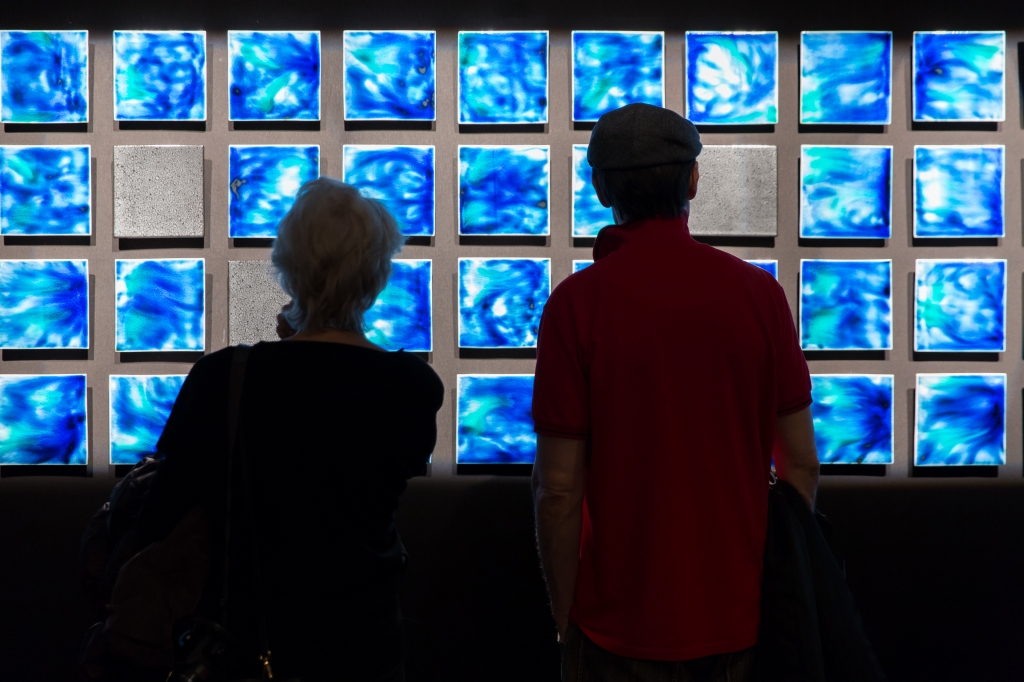
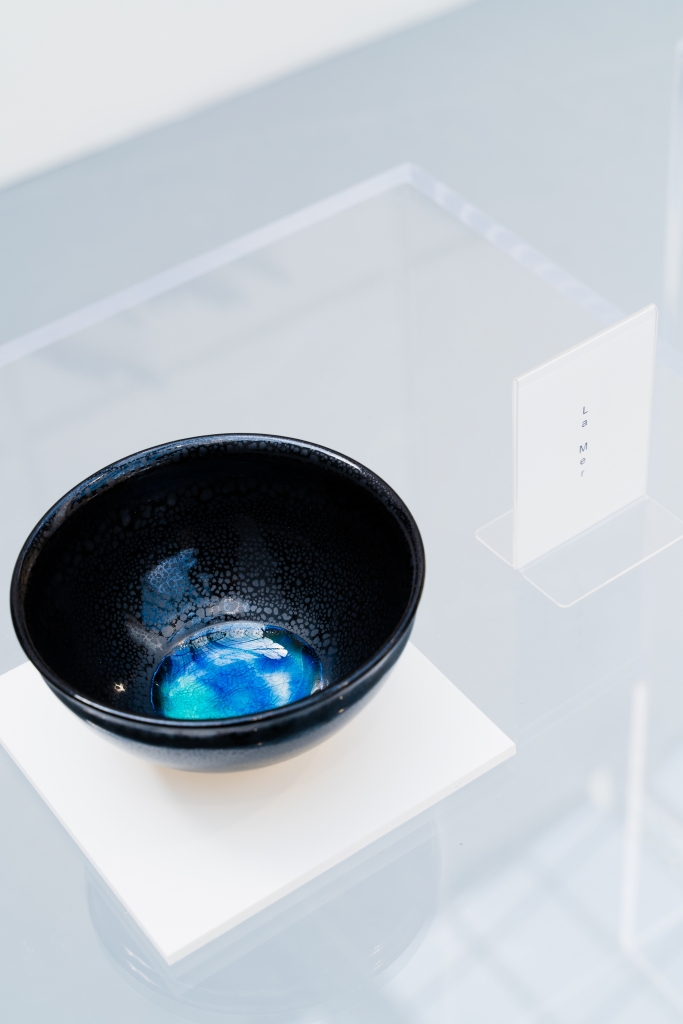
As he was preparing to open the pottery, he began to experiment, making a number of prototypes in a small kiln. He gathered a variety of mineral ores, mostly from the area of Japan previously known as Ryukyu, and used them in his glazes. When just a young child, Kyo-u’s son, Haruhiko Kaneko, would play with the bottoms of milk bottles, pretending they were spectacles. He begged his father to use them in his pottery, so Kyo-u eventually agreed. He had thought that the glass would simply be adhered to the ceramic material after firing. What actually happened was the transparent glass took on a pale blue colour in the firing process. Today, we know that it is the metallic content of the glass which gives off colour, but at the time there were no ceramic artists anywhere in the world working to combine glass and pottery. That moment was the first time that anyone anywhere in the world had succeeded in fusing glass, its integrated colour brought out through firing, and ceramic material. Over the next six years, Kyo-u worked to perfect the technique, and thus the Yoron-yaki pottery was born.
想い
Our Spirits
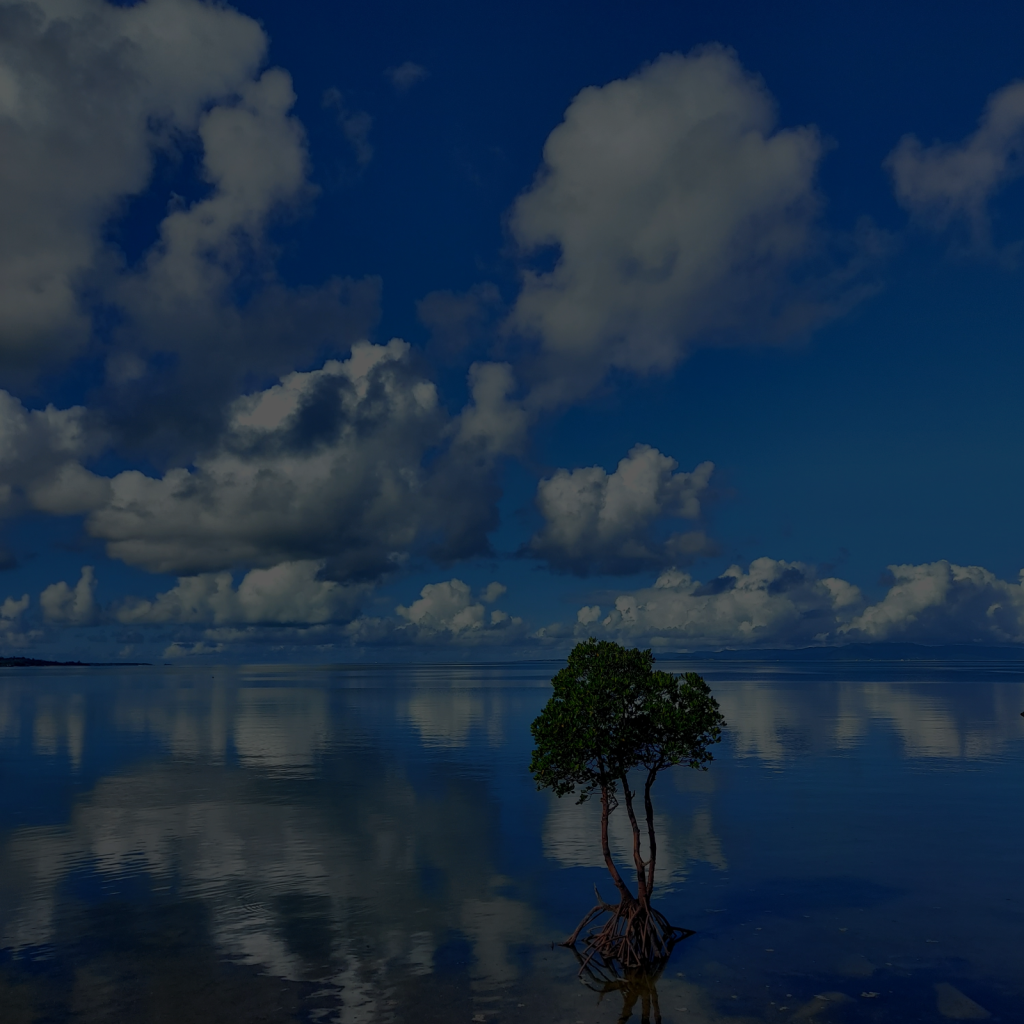
I first saw the Ryukyu ocean in 1964, when I was three years old. The ocean was a vibrant shade of blue and soft green, and when I stepped onto the beach, I saw the white coral beach and the beautiful, crystal clear ocean stretching endlessly under the dazzling sun. I also have fond memories of playing like Issunboshi, riding on a giant clam that was bigger than me. The island in question was Yoron Island, which was the southernmost point of Japan before Okinawa was returned to Japan.
My father was a photographer and was thinking about ways to improve the lives of all the islanders of the Amami Islands, who were in extreme poverty around 1960. So he parted ways with his mentor, Ken Domon, and began holding solo exhibitions around the country and appearing in the media in order to shine the spotlight on tourism on the entire archipelago. All of the photos of Yoron Island that appeared in the Discover Japan magazine run by the Japanese National Railways at the time were taken by my father. He also believed that waves would spread, and that if he could create a wave of tourism in the Amami Islands, that wave would eventually spread to the entire Ryukyu Islands. This led to the start of his lonely battle to promote tourism in Amami and Okinawa.
At the time, there were no suitable souvenirs to be found in the Amami Islands, and when he learned that the Tenmoku tea bowls he had encountered in temples and shrines in Kyoto and Kansai were made in Jian kilns in Fujian Province, China, which is at the same latitude as Okinawa, he decided to turn the culturally valued Tenmoku tea bowls into an asset for the tourism industry, and so he created Yoron-yaki, the predecessor to Ishigaki-yaki.
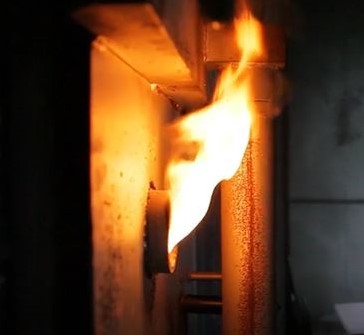
The Okinawan sea glittered brilliantly under the sun in the pottery my father encountered when I was four years old. It reminded me of the image of sitting alone on a small sabani boat, bathed in the radiant sunlight, gazing out at the deserted white sand beach and blue ocean. The now-common combination of glass and ceramics was considered unorthodox at the time, and no one made it. However, my father, a photographer, thought this pottery could also be a good addition to the next generation of Okinawan pottery. This is where the challenges of integrating glass and ceramics began. Glass expands at 1300 degrees, while ceramic can only withstand temperatures approaching 100 degrees. The difference in shrinkage rates meant that the pottery would naturally break due to differences in shrinkage rates. Naturally, I often watched my parents and older sister struggle as a child, building up a mountain of failed pieces. The pottery we know today is the result of all that hard work.
Times change, but the spirit of Yoron-yaki that has been passed down to us by our entire family cannot be allowed to end like this. With the desire to spread the name to the world, we started out as Ishigaki-yaki. Ishigaki-yaki, which was reborn as an art and craft product from the folk art of Yoron-yaki, has changed its name, but it continues to carry on the philosophy and beliefs.
I don’t have any children. These Ishigaki ware pieces are my children. I named them Ishigaki ware because I felt a mission to imprint the name of a place in Ryukyu on this beautiful piece of pottery. It’s said that pottery can last for 2 million years if carefully preserved. People want to know where a piece that moves them was made. They inevitably find the name Ishigaki by looking at the back of the piece. I hope this will mark the beginning of a cultural journey. Even 3,000 years from now, people will still be able to see the beautiful Okinawan sea and spark their interest in Japan. I chose the name “Ishigaki,” meaning “the southernmost point of Okinawa.” I hope this place name will inspire cultural figures from around the world to visit the Yaeyama Islands, Okinawa, and Japan. Like the pyramids of Egypt, I hope my children’s Ishigaki ware will become a symbol of Japan, and that Ishigaki ware will spread its wings and become a messenger to the world, bringing inspiration and comfort to as many people as possible.
My dream is to travel from France to all of Europe, the Arab countries, Africa, North America, South America and any other country I have a connection with, and I will continue to work towards making that dream a reality.
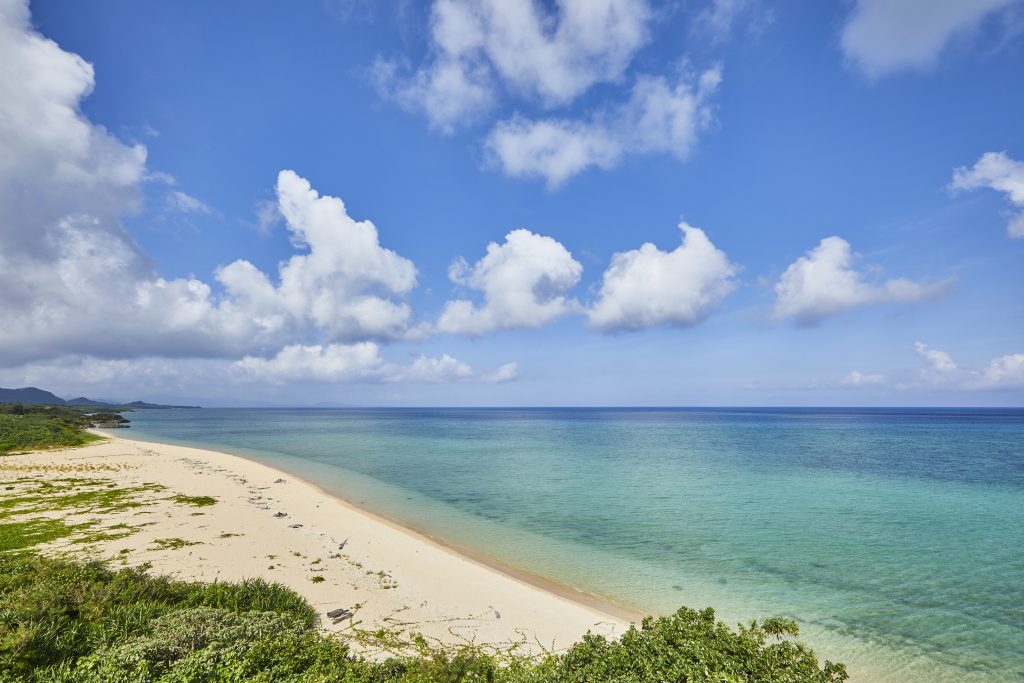
Finally, I live surrounded by the magnificent Paranoma Sea, a marine blue and emerald green illuminated by the sparkling sun. To me, this oasis sea is everything and the source of life. It is like a mother’s presence. I am also grateful to nature for providing me with everything, including beautiful flowers and the chirping of birds on this island surrounded by greenery.
I have decided to dedicate the rest of my life to sharing the wonders of this beautiful ocean with people all over the world through my pottery, as a small token of my gratitude to nature, to the customers from all over the world who visit the Ishigaki Pottery Gallery, and to the people of Okinawa and all of Japan who always support me. I would be delighted to write the next page of the Ishigaki Pottery story together with you all.
窯元創立の目的
Purpose of founding
窯元創立の目的
Purpose of founding
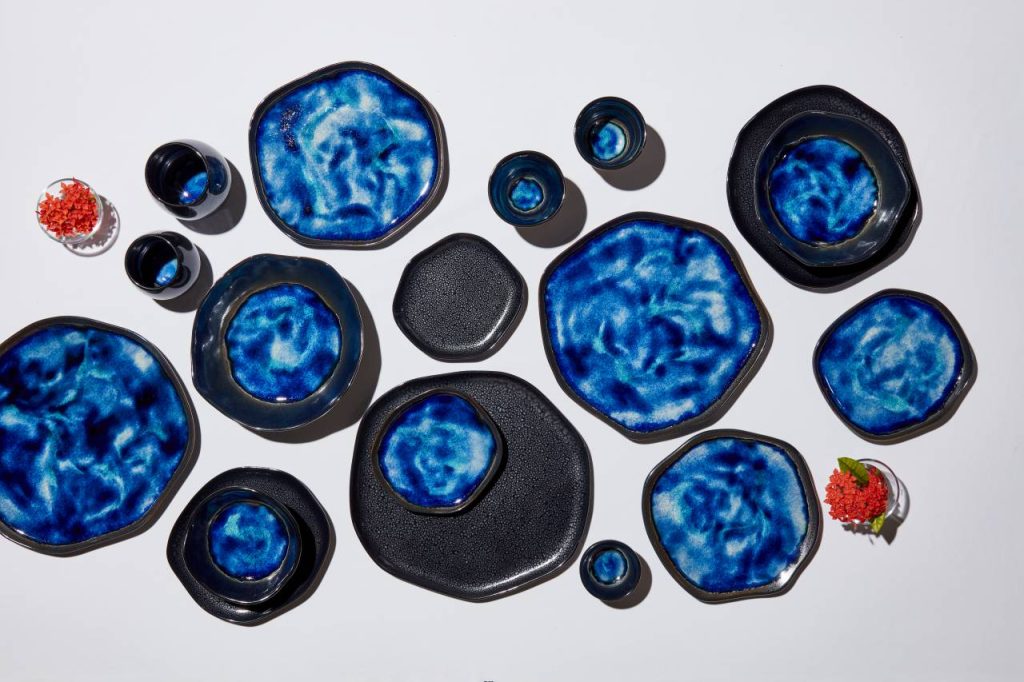
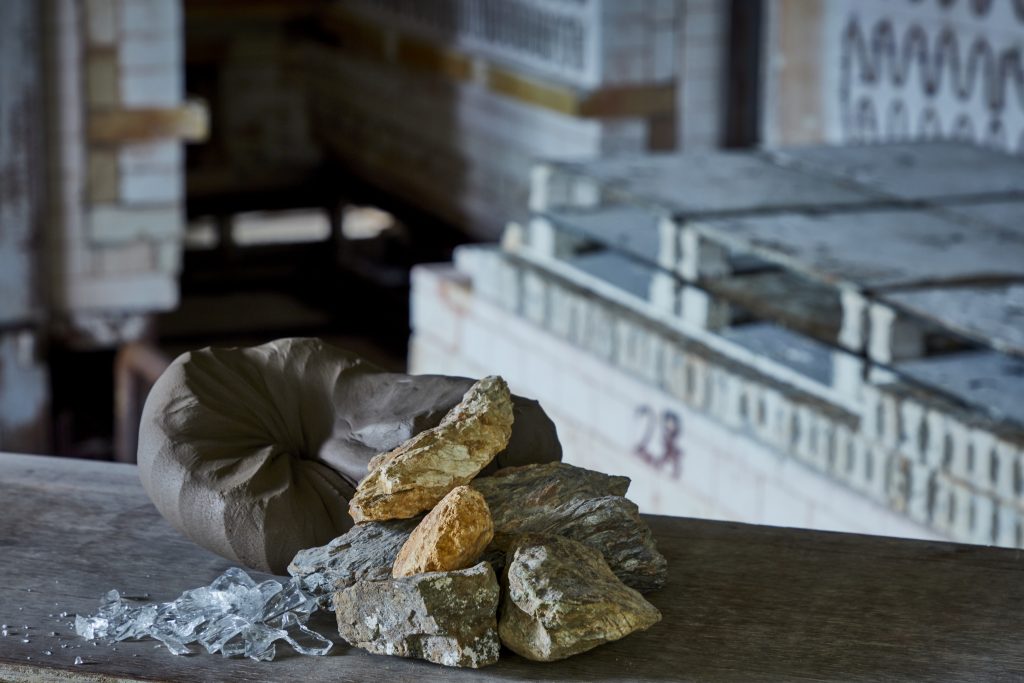
I want more people around the world to know about “Ishigaki,” the name of the place where Ishigaki-yaki pottery is located on Ishigaki Island. I also want to preserve the fusion of glass and ceramics discovered by Kyo-u in 1964. Using powdered ore and transparent glass, I want to create glass that reflects the color of the Okinawan sea, and to create pottery with Yuteki Tenmoku (oil-drop tenmoku) design. With these two goals in mind, I founded the Ishigaki-yaki pottery in 1999 on Ishigaki Island, where the ore needed for Ishigaki-yaki is abundant. Fortunately, pottery can exist for 2 million years, and it can act as a messenger to convey things that I cannot fully convey. It would be my greatest wish if Ishigaki Island could become a starting point for traveling around Japan. It would be my greatest joy if this tradition continues forever, and if my works are passed on to caring museums and collectors, bringing joy to those who view them.
挑戦
Challenge
挑戦
Challenge
Forty-eight years ago, the fusion of glass and ceramics was unusual and extremely rare. When people are challenged by changes to their current lifestyles and values, they feel uncomfortable and rebel. However, once they begin to understand it, their appreciation transforms into admiration. Even those who initially dislike it eventually become more widely accepted, and once it’s used by celebrities and famous restaurants, they begin to appreciate it. Fifty years ago, porcelain was still the norm around the world, and pottery and porcelain were widely used in Japan, but the fusion of ceramics and glass was unheard of. Today, many people know that such oceans exist, seeing the marine blue and emerald green oceans of Tahiti, New Caledonia, and Okinawa. Even on television, we can see tropical oceans in stunning quality, giving the illusion of being on the beach. At the time, many people considered the fusion of glass and ceramics to be heretical, and even rejected the idea of ocean colors. While we now understand that various colors come from metals, at the time, the very idea of color, such as those coming from minerals, was a myth. The Ishigaki Pottery Gallery is visited by 100,000 tourists a year, and we are delighted to see that many of them purchase pieces to decorate their rooms or as tableware for special guests.